Wood Carving Ideas for Beginners: First Projects in Every Carving Style
Published
As an Amazon Associate we earn from qualifying purchases. This does not change our picks. Affiliate disclosure
New to Prime? Try Prime free for fast, free shipping on eligible items.
Gear for this job
All 7 picks comparedFlexcut KN13 detail knife, 1.5 in blade
See price on AmazonSee it on AmazonBeaverCraft C4s sloyd knife, 3 in, with sheath
See price on AmazonSee it on AmazonMorakniv 106 wood carving knife, 3.25 in blade
See price on AmazonSee it on Amazon
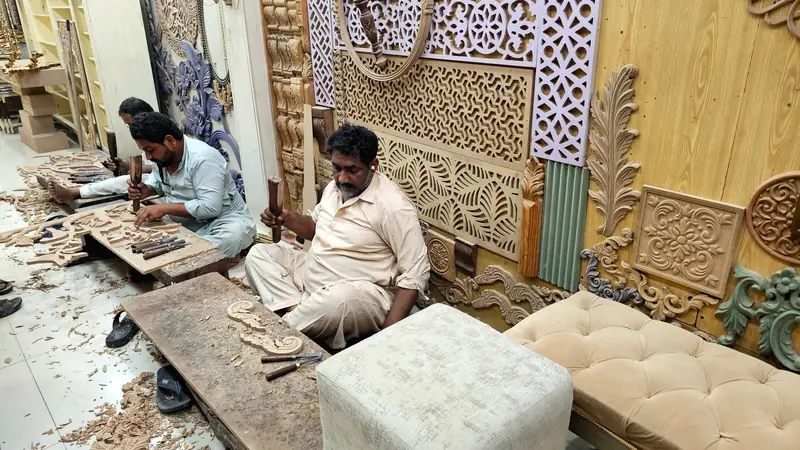
The best wood carving ideas for beginners are small projects that teach one technique at a time: a whittled heart or bird with a knife, a chip carved coaster, a relief leaf with palm gouges, a spoon from a green branch, a small animal in the round, or a power-carved pendant. Each idea below lists the wood, tools and rough time it takes, grouped by carving style so you can start with the tools you already have or choose a style before buying any.
Knife-only ideas: whittling
Whittling needs only a knife and a block or branch, so it is where most people start. Good first ideas are a heart or a simple egg from a 1 x 1 x 3 inch basswood block (about an hour), a comfort bird or worry stone shaped to fit the palm (two to three hours), a small gnome or Santa on a 1 x 1 inch stick (two to four hours), a butter spreader from a flat piece of basswood or a green branch, and a walking stick with a carved handle.
These teach the push cut, the pull or paring cut and the stop cut, the three cuts every other style builds on. Our separate list of whittling projects goes through knife-only ideas in order, with the time each one takes.
Chip carving ideas: coasters, boxes and borders
Chip carving removes small triangular chips from a flat surface to make geometric patterns. It needs a chip carving knife, a pencil, a ruler and a flat board of basswood about 3/8 to 1/2 inch thick. First ideas: a coaster with a rosette (about 4 inches across, two to three hours), a border of triangles around a cutting board handle or a box lid, a name plaque with chip carved letters, and flat Christmas ornaments.
Chip carving rewards precision more than artistic skill. If you like measuring and repeating patterns, it is the most satisfying first style, and the tool cost is low: one knife does almost everything.
Relief carving ideas: leaves, letters and signs
Relief carving lowers a background around a raised design, using gouges and a V-tool. Start with a single maple or oak leaf on a 6 x 8 inch basswood board 3/4 inch thick (one or two weekends), an initial or monogram, a simple fish, or a house number sign. Oak leaves with acorns are a good second project because they introduce one layer passing over another.
A small palm tool set with a V-tool, a shallow gouge, a medium gouge and a deep gouge covers these. Relief carving is a good choice if you want pieces to hang on a wall, and it builds the gouge skills you need for larger work.
Spoon and kitchen ideas: green wood carving
Spoon carving is usually done in fresh green wood split from a branch or log, which cuts much more easily than dry wood. A straight knife and a hook knife are the core tools, and an axe or saw roughs out the blank. First ideas: a flat spatula or butter spreader (no hollow, so only a straight knife), a cooking spoon with a shallow bowl, a scoop for coffee or flour, and a spreader with a hooked handle to hang on a jar.
Birch, cherry, maple, alder and fruitwoods are common spoon woods. If you cannot get green wood, pre-cut spoon blanks let you start right away. A first eating spoon takes most beginners four to eight hours spread over a few sessions.
Carving in the round and power carving ideas
Carving in the round means a figure seen from every side, usually with knives and small gouges. Good first figures are a sitting cat, a simple bear or pig, a duck or songbird, and a face on the corner of a block. Use basswood 1-1/2 to 2 inches square, draw the side and top view, saw away the excess and carve toward the outline from all sides.
Power carving with a rotary tool or a reciprocating carver suits hardwoods and people with limited hand strength. First ideas: a leaf pendant or a small fish from a 1/4 inch board, a simple bird in basswood or tupelo, letters routed into a sign, or texturing the bark of a branch. A coarse carbide burr for roughing and a few small detail bits cover these, with a vise, eye protection and a dust mask.
How to choose your first idea
Pick by the tools you have and the result you want. With only a knife, start with whittling and chip carving. If you want useful objects, start with a spatula and then a spoon. If you want wall pieces, relief carving. If hand strength or hard local wood is a problem, consider power carving.
Whatever the style, keep the first project small enough to finish in one to three sessions, use basswood or green wood rather than hard dry wood, and strop the edge every 20 to 30 minutes of carving. Finishing a small piece teaches more than abandoning a big one halfway.
Frequently asked questions
What is the easiest thing to carve out of wood? A whittled heart, egg or simple comfort bird from a small basswood block. Each needs only a knife and teaches the basic cuts in an hour or two.
What is the best wood for beginner carving projects? Basswood for knife, chip and relief carving, because it is soft and even. For spoons, fresh green wood such as birch, cherry or maple, which is easy to cut while wet.
Do I need a lot of tools to start wood carving? No. One good knife, a strop, a thumb guard or glove and some basswood are enough for whittling and many first projects. Add gouges, a hook knife or a chip knife when you move into a particular style.
How long does a beginner wood carving project take? Small whittled pieces take one to three hours. A chip carved coaster takes two to three hours, a first relief leaf one or two weekends, and a first eating spoon four to eight hours.
What you need for this
- See price on AmazonAmazon
Flexcut KN13 detail knife, 1.5 in blade
From Best Whittling Knife for Beginners: Fixed-Blade Carvers Compared
- See price on AmazonAmazon
Flexcut KN15 chip carving knife, 1 in blade
From Best Chip Carving Knives: Cutting Knife, Stab Knife and Starter Sets
- See price on AmazonAmazon
Flexcut FR405 deluxe palm gouge set, 9 tools
From Best Wood Carving Gouge Sets: Palm Tools for Hand Carving
- See price on AmazonAmazon
BeaverCraft SK1 hook knife, right-handed
From Best Spoon Carving Hook Knives: Right-Hand, Left-Hand and Double-Edge